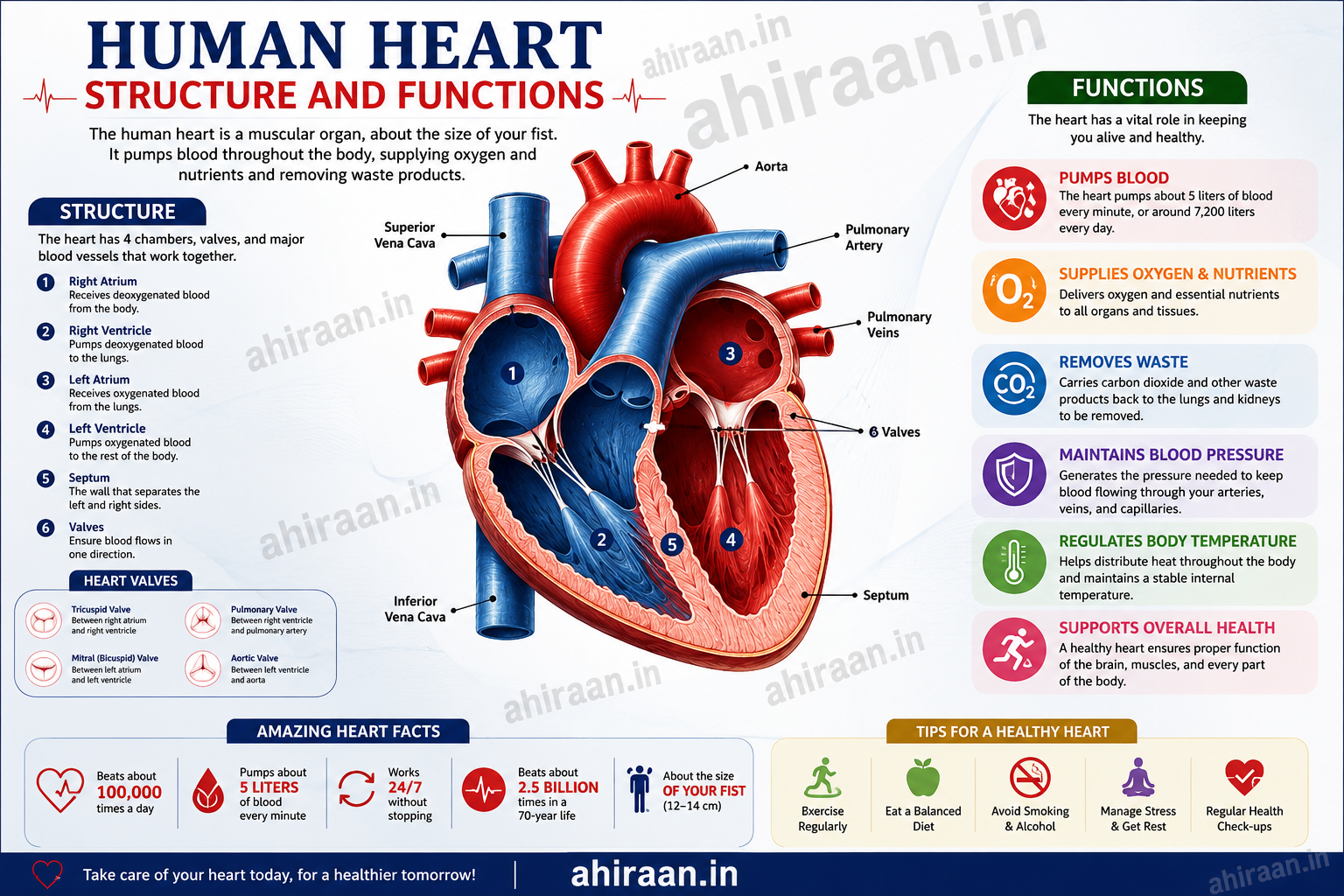
The Human Heart is one of the most important organs in the human body. It works like a powerful pump that continuously circulates blood throughout the body. Understanding the structure and functions of the human heart is essential for students preparing for exams like NEET, UPSC, SSC, and other biology-related competitive exams.
What is the Human Heart ?
The human heart is a muscular organ located slightly toward the left side of the chest. It pumps oxygen-rich blood to all body parts and returns oxygen-poor blood to the lungs for purification.
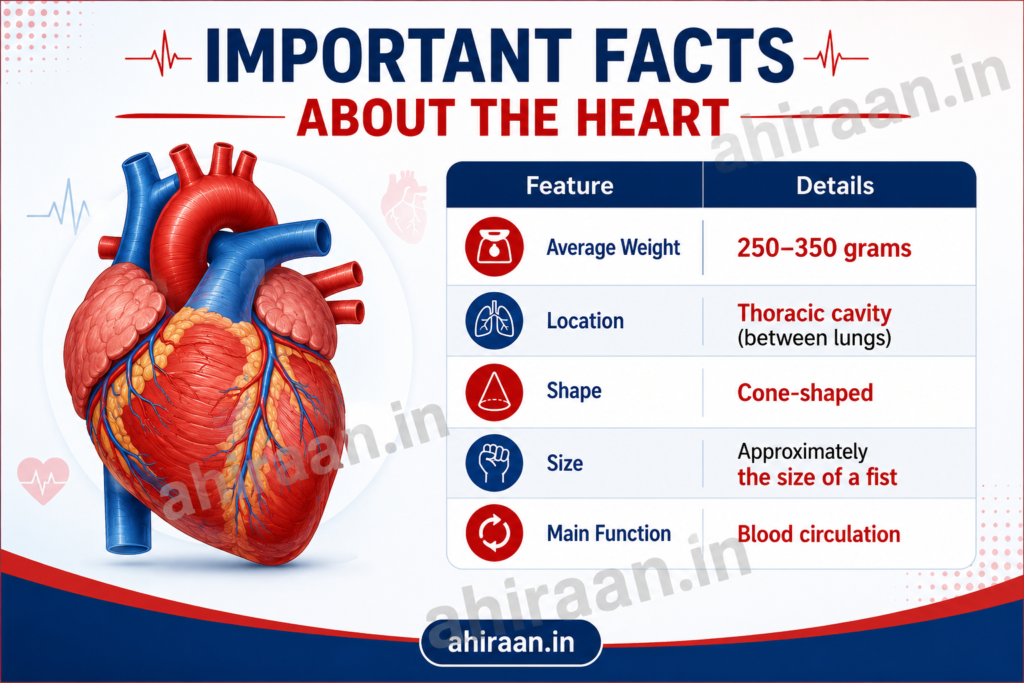
Important Facts About the Heart
| Feature | Details |
| Average Weight | 250–350 grams |
| Location | Thoracic cavity (between lungs) |
| Shape | Cone-shaped |
| Size | Approximately the size of a fist |
| Main Function | Blood circulation |
Structure of the Human Heart
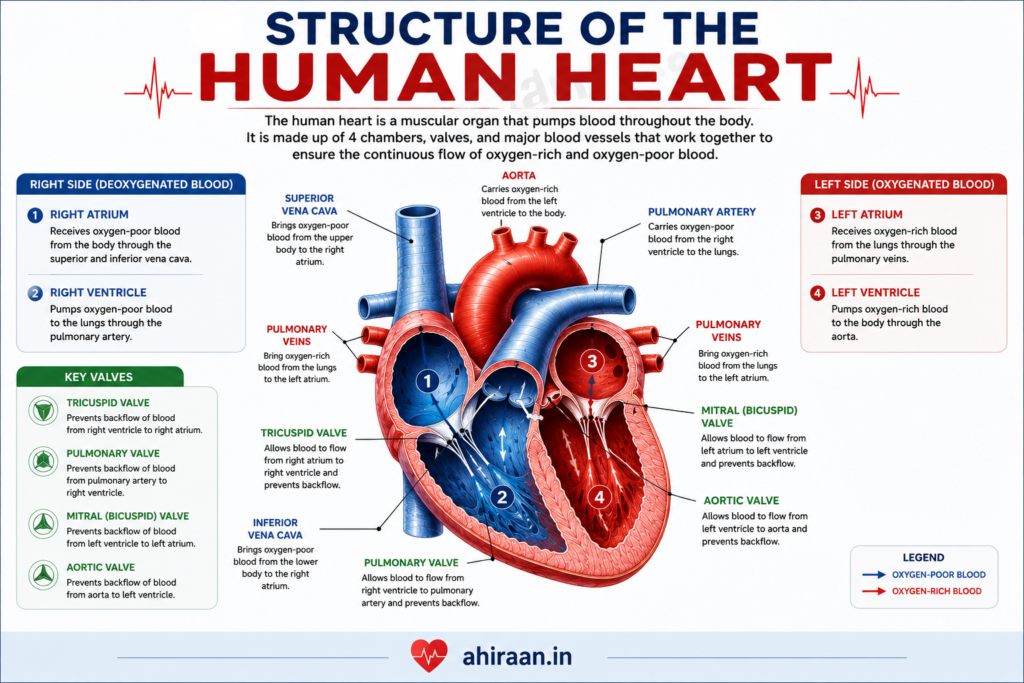
The human heart has four chambers and several important blood vessels and valves.
1. Four Chambers of the Heart
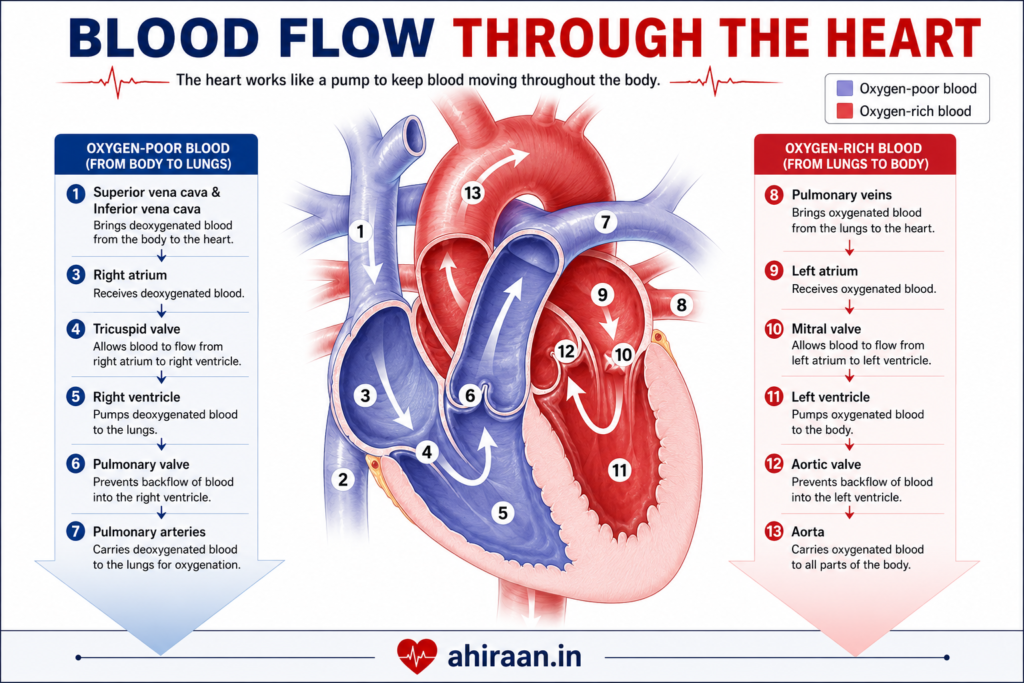
Right Atrium
- Receives deoxygenated blood from the body.
- Blood enters through the superior and inferior vena cava.
Right Ventricle
- Pumps deoxygenated blood to the lungs through the pulmonary artery.
Left Atrium
- Receives oxygenated blood from the lungs through pulmonary veins.
Left Ventricle
- Pumps oxygen-rich blood to the entire body through the aorta.
- Thickest muscular wall among all chambers.
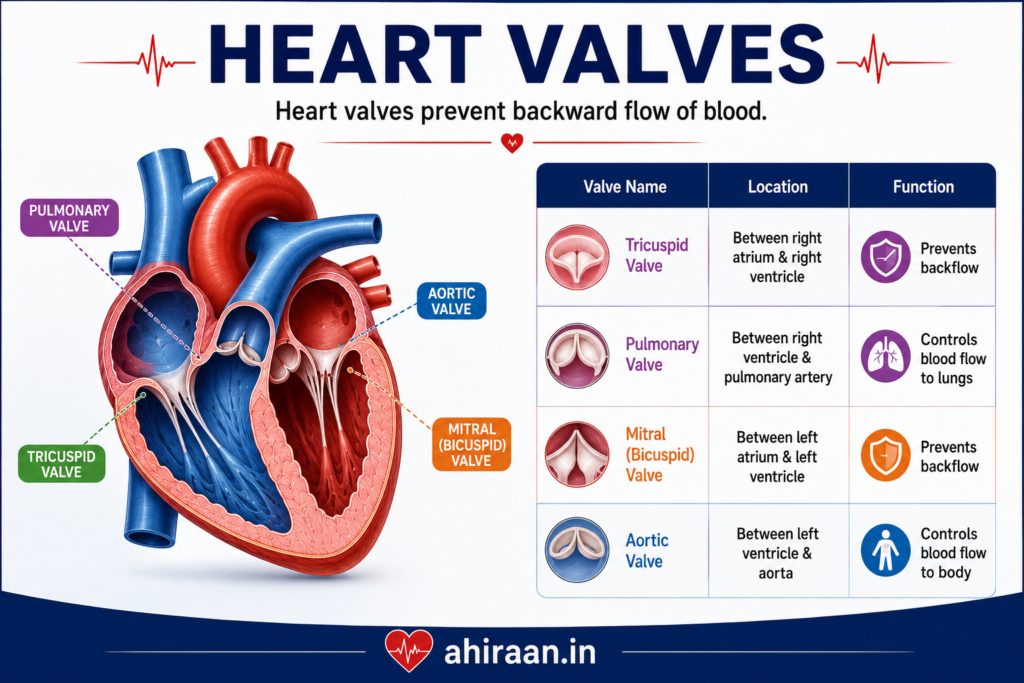
Heart Valves
Heart valves prevent backward flow of blood.
| Valve Name | Location | Function |
| Tricuspid Valve | Between right atrium & right ventricle | Prevents backflow |
| Pulmonary Valve | Between right ventricle & pulmonary artery | Controls blood flow to lungs |
| Mitral (Bicuspid) Valve | Between left atrium & left ventricle | Prevents backflow |
| Aortic Valve | Between left ventricle & aorta | Controls blood flow to body |
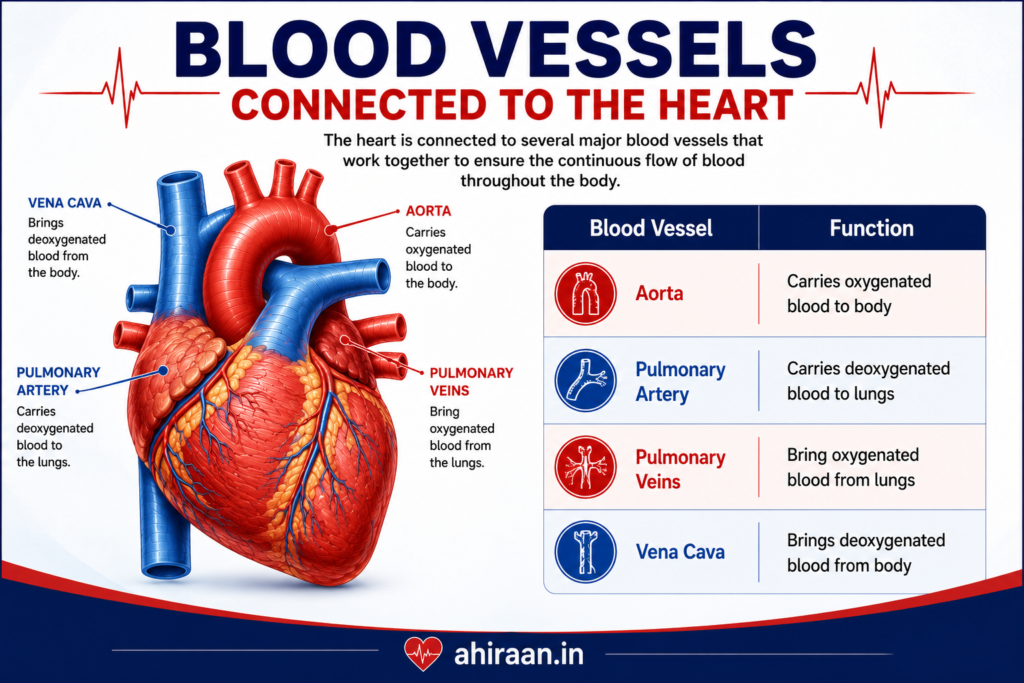
Blood Vessels Connected to the Heart
| Blood Vessel | Function |
| Aorta | Carries oxygenated blood to body |
| Pulmonary Artery | Carries deoxygenated blood to lungs |
| Pulmonary Veins | Bring oxygenated blood from lungs |
| Vena Cava | Brings deoxygenated blood from body |
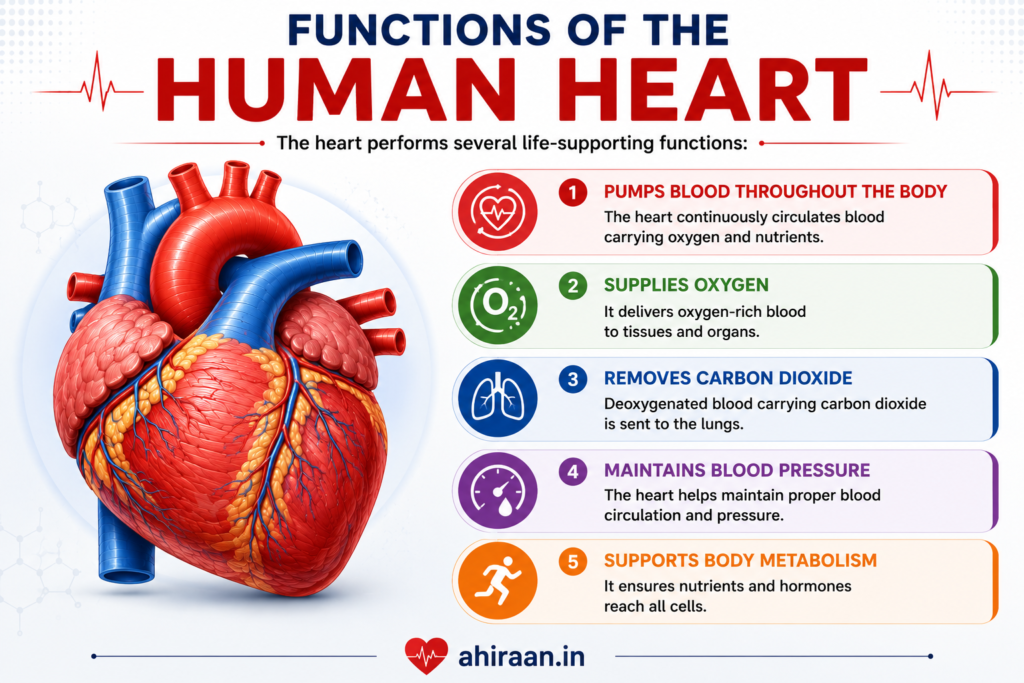
Functions of the Human Heart
The heart performs several life-supporting functions:
1. Pumps Blood Throughout the Body
The heart continuously circulates blood carrying oxygen and nutrients.
2. Supplies Oxygen
It delivers oxygen-rich blood to tissues and organs.
3. Removes Carbon Dioxide
Deoxygenated blood carrying carbon dioxide is sent to the lungs.
4. Maintains Blood Pressure
The heart helps maintain proper blood circulation and pressure.
5. Supports Body Metabolism
It ensures nutrients and hormones reach all cells.
Step-by-Step Blood Circulation
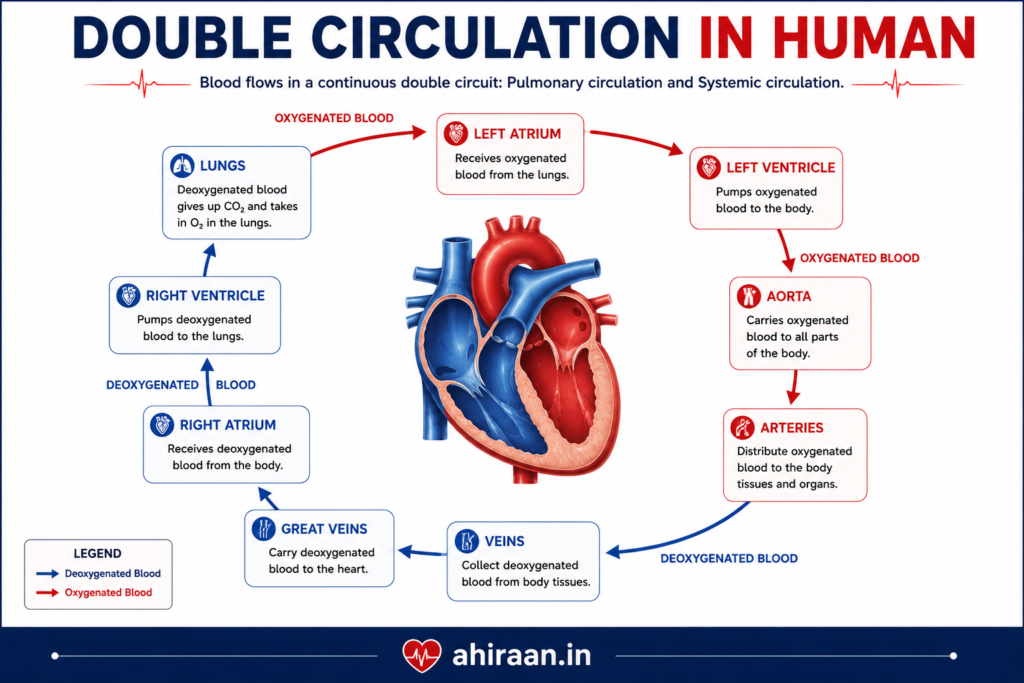
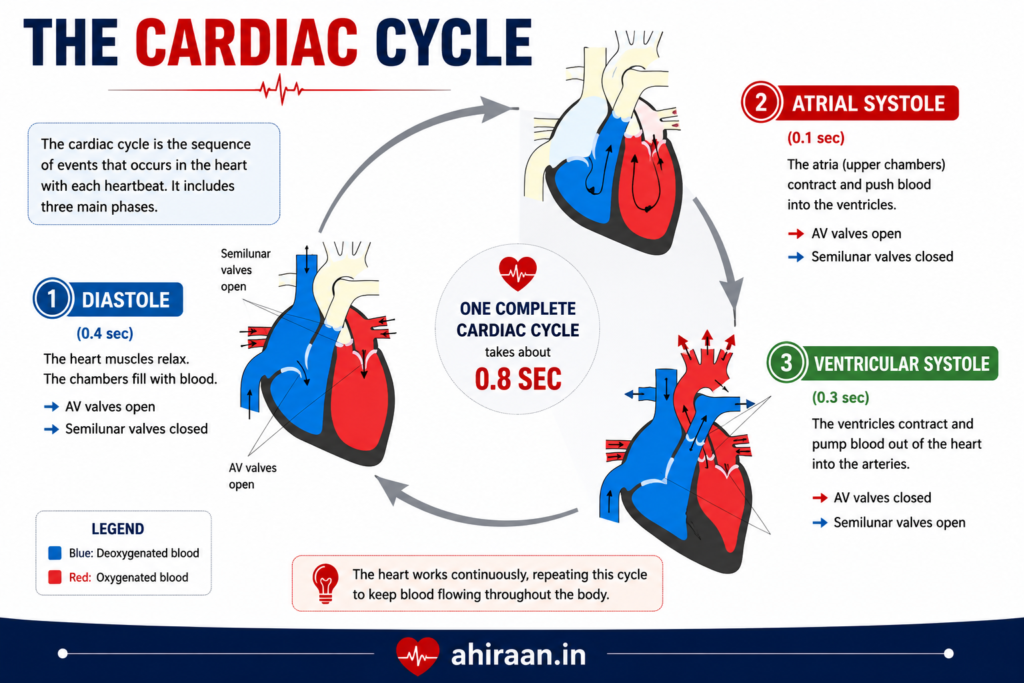
- Deoxygenated blood enters the right atrium.
- Blood moves to the right ventricle.
- Blood is pumped to the lungs.
- Oxygenated blood returns to the left atrium.
- Blood moves to the left ventricle.
- Oxygen-rich blood is pumped to the entire body.
Types of Circulation
Pulmonary Circulation
Movement of blood between the heart and lungs.
Systemic Circulation
Movement of oxygenated blood from the heart to body tissues.
Layers of the Heart
| Layer | Description |
| Pericardium | Protective outer covering |
| Myocardium | Thick muscular middle layer |
| Endocardium | Inner lining of chambers |
Common Heart Diseases
| Disease | Description |
| Coronary Artery Disease | Blockage in arteries |
| Heart Attack | Reduced blood supply to heart muscles |
| Arrhythmia | Irregular heartbeat |
| Hypertension | High blood pressure |
Tips to Keep the Heart Healthy
- Exercise regularly
- Eat a balanced diet
- Avoid smoking and alcohol
- Maintain healthy body weight
- Reduce stress
- Get regular health checkups
Conclusion
The Human Heart is a vital organ responsible for maintaining blood circulation and supplying oxygen throughout the body. Understanding the structure and functions of the heart helps students build strong biology fundamentals and improve preparation for competitive exams like NEET and SSC.